
A new center based at the UW Information School aims to draw 91自拍ers across campus who conduct related work but haven’t collaborated.
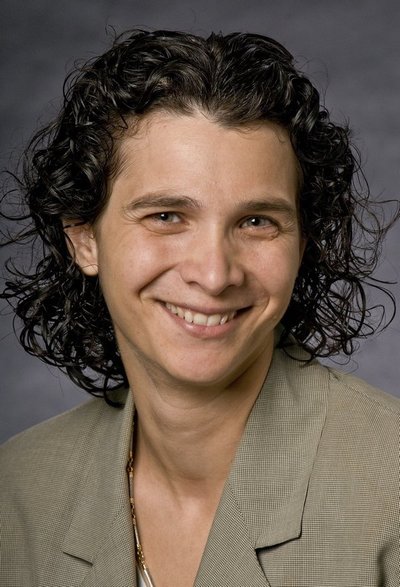
91自拍 130 UW faculty members have demonstrated interest in the Center for Information & Society, said Karine Barzilai-Nahon, an assistant professor of information who directs the center.
It’s a broadened successor to the UW Center for Internet Studies, which began in the late ’90s. Researchers study the influence of communication technologies on developing communities around the world. Topics include information policy, digital technology and effects of new technology on culture.
The center is housed on the third floor of Mary Gates Hall and in the Roosevelt Commons building at 4311 11th Ave. NE.
To encourage faculty collaborations, the center has held what amounts to speed dating: bringing faculty members together for short conversations about their 91自拍. The center has also created a listserv, a wiki and a database of individuals and 91自拍 interests.
The largest component of the center is the Information & Communication Technologies and Development Program, (). Christopher T. Coward heads a staff of 10, including 91自拍 associates Ricardo Gomez, Rucha Ambikar and Maria Garrido.
Their 91自拍 includes a broad, 18-month study of public information centers (including libraries and similar places) in 24 countries, and a study of people in developing communities who have had information and communication technology training in the past few years. Garrido, for example, recently traveled to rural Latvia, one of the poorest regions in the newly expanded European Union, where she studied how various groups conduct e-training and its effect on employment. (Read her travel blog at: .)
The ICTD program is funded with about $4.4 million from sources such as the Bill & Melinda Gates Foundation, Microsoft Community Affairs and the International Development Research Center, a public agency in Canada.
At the Center for Information & Society, Barzilai-Nahon’s work includes a study conducted with her husband, political science Professor Gad Barzilai, on ways religious fundamentalists reshape technology for their cultures and let it change their lives.
With University of British Columbia Professor Izak Benbasat, Barzilai-Nahon is also identifying constraints and incentives to make technology such as the Internet available to handicapped users.
For more information, on the center, visit its Web site: .